
The BSHM is delighted to announce the winner of the 2025 Neumann Prize, Karl Sigmund’s The Waltz of Reason: The Entanglement...
Professor Robin Wilson (one of the BSHM HiMEd lecturers), with the Oxford University Mathematical Institute, has created a series of...
The BSHM appointed three History of Maths in Education (HiMEd) Lecturers for 2024–25. Click on the Lecturer’s name to access a page with a bio and their topics of interest.

Since 2019, Deborah has given an annual series of plenary lectures at MathPath, a residential summer program for students showing...
Read More
Over the past 50 years Robin has attempted, through his writings and over 1000 public talks and lectures, to ‘spread...
Read More
Peter is a sometime-guest on BBC Radio, a podcaster and blogger on mathematical topics, and a columnist at New Scientist...
Read MoreWe are not currently accepting any applications.
Candidates should send a short CV and covering letter to the Education Secretary Ciarán Mac an Bhaird, indicating:
The combined CV and covering letter should be no more than four A4 pages.
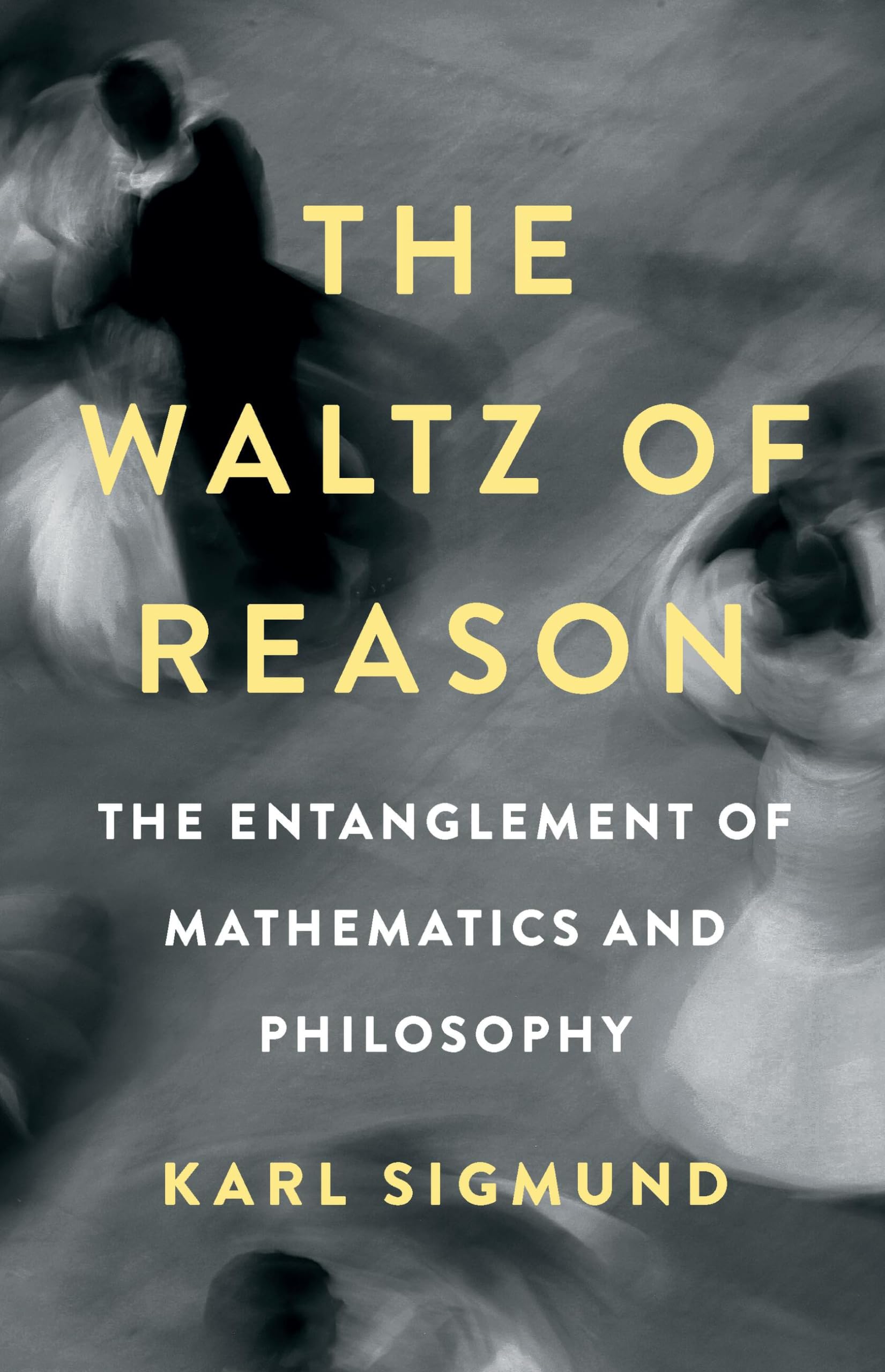
Karl Sigmund’s The Waltz of Reason: The Entanglement of Mathematics and Philosophy (448 pages, Basic Books, ISBN-139781541602694)
The Waltz of Reason is an engaging history of how mathematical ideas and philosophical thought have shaped each other across more than two thousand years. The author, a mathematician and pioneer of evolutionary game theory, explores themes such as geometry, logic, probability, cooperation, voting, and the social contract, demonstrating how mathematics has influenced our understanding of reason and human behaviour. The book ranges from classical Greek geometry to modern debates about fairness, infinity, and decision‑making, weaving together important figures from Plato to contemporary theorists. Written with clarity and humour, the book provides a captivating tour of key ideas that is both accessible and intellectually rich.
Neumann Prize Panel: Chris Budd (University of Bath), Andrew Burbanks (University of Portsmouth), Deborah Kent (University of St. Andrews), Ciarán Mac an Bhaird (Chair, Maynooth University).
The prize is awarded for a recent book in English (including books in translation) dealing with the history of mathematics, aimed at a non-specialist readership. There is no further restriction on the subject matter, nor on the nationality of the author or the country of publication. However, the following will not be considered:
The prize is named in honour of the late Peter M. Neumann O.B.E., a former President and longstanding contributor to the Society. The value of the prize is £1000.
We are not currently accepting any nominations but any queries should be sent to Dr. Ciarán Mac an Bhaird, Chair of the BSHM Neumann Prize Committee.
2023: Stephen M. Stigler, Casanova’s Lottery: The History of a Revolutionary Game of Chance.
2021: Tony Royle, The Flying Mathematicians of World War I.
2019: Martin Beech, Going Underground.
2017: Jimmy Soni & Rob Goodman, A Mind at Play.
2015: Sydney Padua, The Thrilling Adventures of Lovelace and Babbage.
2013: Jacqueline Stedall, The history of mathematics: A very short introduction.
2011: Clifford A. Pickover, The Math Book.
2009: Reviel Netz and William Noel, The Archimedes Codex.
The British Society for the History of Mathematics (BSHM) is delighted to announce its Schools’ Prizes for 2025-26.
We offer awards in two age categories: 11–15 and 16–19. Please note that previous winners or runners‑up in a specific age group may not submit again in that same group. The competition is only open to students attending schools in the UK and the Republic of Ireland.
Entries may take any form—written essays, presentations, films, podcasts, songs, artworks, or other creative media. We strongly encourage students to produce work that is personal, original, and clearly their own: something that reflects their own curiosity, voice, and perspective on the topic. Submissions should demonstrate independent thought and genuine engagement with the topic.
The use of AI‑based tools does not, in itself, disqualify a submission; however, the primary contribution must be the student’s own. As part of the submission process, you will be asked to indicate whether, and to what extent, AI‑based tools were used.
The word count for essays should be 1000 words (not including references) or equivalent (if the submission is not an essay).
For 2025–26, the topic is again Ethnomathematics (see description below). Submissions not on this topic will not be considered.
For these prizes we defined Ethnomathematics as the the mathematical ideas of traditional peoples for instance, including (but not limited to) Inuit, Navajo, Incas of South America, the Māori, the Aboriginal peoples of Australia, Caroline Islanders of Oceania, the Bushoon, and Kpelle of Africa, and/or a consideration of the broad practices of communities that typically fall outside of the traditional discipline boundaries of the mathematical sciences. These activities, with algorithmic and/or geometric characteristics, include weaving, design, carving, string games, construction, recreational pursuits, ritual, to name a few.
You can submit your entries on the form below. The deadline for submissions is Friday, June 19th, 2026. Any queries can be sent to Education Officer Ciarán Mac an Bhaird.
2024-25:
(11-15 category): Joint first was awarded to the following:
Naima Mohamud, Ashmole Academy, ‘Counting Without Numbers: The Maths Hidden in Ancient Money Systems‘.
Leilani Richardson, Blackeath High School, ‘The theory of relativity: How aboriginals use mathematics to keep track of their relatives‘.
(11-15 category) Runners-Up:
Helen Vien, Henrietta Barnett School, ‘Ethnomathematics and the Global Development of Knot Theory‘.
Mustafa Yasir, Sutton Grammar School, ‘Navajo Ethnomathematics‘.
(16-19 category) Joint first was awarded to the following:
Kiara Kimera, St Helen and St Katharine, ‘The Mathematical Genius of African Hair Braiding‘.
Tulasi Shah, Chelmsford County High School for Girls, ‘Unfolding the Cultural and Mathematical History of Japanese Origami‘.
(16-19) Runners-Up:
Eden Ainsworth, Clitheroe Royal Grammar School, ‘Ink and Infinity- Tracing Mathematical Functions in Polynesian Tattoo Art‘.
Junias Lee, King’s Maths School, ‘The Mathematics & History Behind the Ethiopian Calendar ‘.
2023-24:
(11-15 category): Shriyaa Varadpande, Cargilfield School, ‘The Power of Nothing (and other discoveries)’.
(11-15 category) Runner-Up: Ciara Dobson, Chelmsford County High School, ‘The life, inventions, and discoveries of Zu Chongzhi’
(16-19 category) Joint first was awarded to the following:
Robert Thackray, Colchester Royal Grammar School, ‘The Unique Mathematics of the Pirahã’.
Huaiyu Wu, Francis Holland School, ‘An Ancient Algorithm from the East: Chinese Remainder Theorem’.
Rosie Tarboton, Wimbledon High School, ‘Ancient Ethiopian Multiplication and Modern Computing’.
(16-19 category) Runners-Up:
Wing Lam Wong, Wimbledon High School, ‘The Jiuzhang Suanshu and Ancient Chinese Methods to Solving Systems of Linear Equations’.
Issa Sourani, Altrincham Grammar School For Boys, ‘A Mathematical Odyssey: The Kerala School’s Legacy’.
2022-23:
(11-15 category): Inez Sheikh, Putney High School, ‘How to become an Olympic Swimmer’.
(16-19 category): Erin McGurk, Altrincham Grammar School For Girls, ‘Three Lions, Two Russian Mathematicians, One Game: Optimising Football Strategy’.
2021–2022:
(11–15 category): Isi Holdom, City of London School for Girls, ‘Wordle: The Numbers Game’.
(16–19 category): Daria Gal, Notting Hill and Ealing High School, ‘The Fourier Series: the lens to see the mysteries of the world’.
2020–2021:
(11–15 category): Daria Gal, Notting Hill and Ealing High School, ‘Mathematics and the mysterious world of creating gold’.
(16–19 category): Carys Williams, Monmouth School for Girls, ‘A story of secrecy and security: the key to unlocking prime numbers’.
2019-2020:
(11-15 category): Reyan Saeed, Chigwill School Essex, ‘Genius of the East, The Discovery and Application of Trigonometry’.
2019-2020:
(16-19 category): Beatrice Bannister, The Henrietta Barnett School, ‘Godel’s Proof’.
No further prizes were awarded this year.
2018-19:
Madi Scott, Greenhead College Huddersfield, ‘A Proof of Euclid of Alexandria’s importance and influence within the field of Mathematics’.
No further prizes were awarded this year.
2017-18:
(11-15 category): Pippa Wakelin, Kendrick School, ‘History and Uses of Infinity’.
(16-19 category): Charles Austin, Norwich School, ‘Calculating Risk: Where would we be without the mathematics of risk?’.
2016-17:
(11-15 category): Nicholas Munro, Sackville School, ‘A brief exploration of mathematical modelling’.
(16-19 category): Dougal Houston, Godalming Sixth Form College,’The pioneers of mathematics and where we would be without them’.
2015-16:
Chiara Falls, from Guildford UK, ‘Discovering Links Between Maths and Architecture’. Chiara was presented with her prize at the BSHM meeting at Birkbeck, University of London on 21 May 2016.
The BSHM is delighted to announce the winner of the 2022-24 Taylor and Francis Early Career Research Prize. Dr Andrea Reichenberger, Technical University of Munich, received the award for their 2023 paper ‘Elli Heesch, Heinrich Heesch and Hilbert’s eighteenth problem: collaborative research between philosophy, mathematics and application’, which was published in the British Journal for the History of Mathematics, 38(3), 208–228. https://doi.org/10.1080/26375451.2023.2297522
The following is the normal information available about this prize. Every three years, the BSHM awards the Taylor and Francis Early Career Research Prize.
The prize is for the best paper by an early career researcher published in the society’s journal, the British Journal for the History of Mathematics.
The winner will be invited to blog on the history of mathematics for the society.
The next prize will be awarded for papers published in the BJHM during 2025, 2026 and 2027.
In the context of the prize an early career researcher is defined to be a person at an early stage in their history of mathematics career; this would normally be a current doctoral student or someone within five years of a relevant PhD (taking account of any career breaks).
Authors submitting articles to the Society’s journal will be asked to state whether they wish to be considered for the award.
Note: until 2022 the prize was awarded every 2 years.
2020–2021:
Sepideh Alassi (at time of winning, postdoctoral research associate at the Digital Humanities Lab at the University of Basel. She earned her PhD in 2020 in Digital Humanities).
2018–2019:
Ellen Abrams (at time of winning, a PhD candidate in the Department of Science and Technology Studies (STS) at Cornell University).
The British Society for the History of Mathematics (BSHM) is delighted to announce its Undergraduate Essay Prize for 2025-26.
The undergraduate essay prize can be written on any aspect from the history of mathematics, in any historical or geographical region. The competition is open to undergraduate or taught masters students at any university in the UK or the Republic of Ireland. Research students are not eligible. Submissions are normally single-authored; please reach out to the Education Officer if you would like to submit a jointly authored paper. If you have any queries about your eligibility, please contact Education Officer Ciarán Mac an Bhaird.
The absolute maximum length for submissions is 3000 words (excluding references), and previous winners or runners up of the undergraduate prize cannot submit another entry.
The award for the best essay is £200 and the winning entry will be considered for publication in our journal, The British Journal for the History of Mathematics. There will be as many run-up prizes awarded as we find appropriate (£100 each).
The winner and runners-up will also benefit from free BSHM subscription for a year. The submissions form is available below and the deadline for submissions is Friday, June 19th, 2026. Any queries can be sent to Education Officer Ciarán Mac an Bhaird.
2025/26:
Stephen Dorman (Open University), ‘Mollie Orshansky and the Moral Arithmetic of Poverty‘.
2025/15 Runner-up:
Shaivi Darsi (Queen Mary University of London), ‘From Dice to Derivatives: How 17th-Century Gambling Shaped Modern Financial Mathematics‘.
2023/24:
Andrew Halyburton (University of St Andrews), ‘The Diffusion of Hindu-Arabic Numerals Throughout Late Medieval Europe and Contemporary Religious Perspectives’
David Thorsteinsson (University of St Andrews), ‘Quantity, Culture, and Cognition: The Role of Agriculture in Shaping Numerical Concepts’
2023/24 Runner-up:
Carys Williams, ‘Hilbert’s Paris Problems: the impact of the 100 year hiatus in the history of the 24th Problem’, University of St Andrews.
2022/23:
Eleanor Brittain (University of Cambridge), ‘Wh.1754: The Crossing of Mathematics, Religion and Art’
2022/23 Runner-up:
James Hayes (University of Galway), ‘Hilbert’s Space: How David Hilbert’s Mentorship Shaped Mathematics’
2022/23 Runner-up:
Felix Lindsay-Smith (University of Lincoln), ‘A preliminary investigation regarding the obscurity of Omar Khayyam’s method of computing cubic roots’.
2021/22:
Zakkai Goriely (Oxford University), ‘British Mathematical Reformers in the Nineteenth Century: Motivations and Methods’
2021/22 Runner-up:
Ffinlo Wright (University of St Andrews), ‘A Turning Point for Game Theory: Situating John F. Nash in the History of Economic Thought’
2020/21:
Ellen Flower (Oxford University), ‘The ‘analysis’ of a century: Influences on the etymological development of the word ‘analysis’ in a mathematical context to 1750′
George Waters (London School of Economics), ‘Exploring the use of mathematics to obtain consensus’
2020/2021 runner up:
Aoife Kearins (Trinity College Dublin), ‘Proofs, Partnerships and the Penny Post: How the Development of the U.K. Postal Service Made Mathematics Collaborative’
2019/20:
Natasha Bailie (Queen’s University, Belfast), ‘Quantifying the unquantifiable: the role of mathematicisation of philosophy during seventeenth century Scotland’
2019/2020 runners up:
Emma Lepinay (University of Oxford), ‘Treatise of Algebra: John Wallis’ journey towards understanding complex numbers’
Molly Chung (University of St Andrews), ‘The effects of rivalry on mathematical development in Europe’
Arman Jena (London School of Economics), ‘The 20th century development of Linear Programming in USA and USSR’
Sasha Ramani (University of York), ‘Deep rooted evidence of the use of mathematical principles in music’
We did not award the prize in 2018-19.
2017-18:
Kamilla Rekvenyi (University of St Andrews) for her essay, ‘Paul Erdös’ Mathematics as a Social Activity’, subsequently published in the British Journal for the History of Mathematics, readable here.
2016/17:
Eli Hymson (University of Exeter), ‘Unreasonable Effectiveness of Foundationless Mathematics’
2016/17 highly commended:
Siddhi Doshi, ‘The evolution of the game theory as a foundation in economic analysis’
Stefan Kitic (London School of Economics), ‘What is “money” and does its use require “mathematics”?’
2015/16:
Michael Seal (London School of Economics), ‘Was there a Revolution in Analysis in the Early 19th Century?’
Brigitte Stenhouse (University of Oxford), ‘How Financial Instability Influenced the Mathematical Publications of Mary Somerville’
2014/15:
Edwin Reynolds (University of Oxford), ‘To What Extent Were the Contributions of Cauchy to the Development of Rigour in Analysis Influenced by Those of Lagrange?’
2013/14:
Remus Stana (University of Glasgow), ‘Mathematics in Nazi Germany’
2012/13:
Ryan Stanley (University of Exeter), ‘Dedekind, Cantor and the rigour of calculus’
2011/12:
Stephanie Crampin (University of Oxford), ‘The contribution of Évariste Galois to the founding of group theory’
Nicole Johannesen (University of St Andrews), ‘The application of mathematical understanding in the ancient Olympic Games’
Originally launched in 2015 as part of the 150th anniversary celebrations of the London Mathematical Society (LMS), the Hirst Prize and Lectureship is now jointly awarded by the LMS and the British Society for the History of Mathematics (BSHM). The prize is named after Thomas Archer Hirst, who was the fifth President of the LMS (1872–1874).
The Hirst Prize and Lectureship is intended to recognise contributions to the history of mathematics. The grounds for the award are contributions to the study of the history of mathematics. The prize shall be awarded in recognition of original and innovative work in the history of mathematics, which may be in any medium.
The prize is open to any mathematician or historian of mathematics. In a given year, the members of the Hirst Prize Committee, and the members of the LMS and BSHM Councils, shall be ineligible for the award of the prize. There is no requirement for the winner to be based in the UK.